
There are dishes that announce the season, and in Sicily this is one of them. A rack of lamb, frenched and proud, roasted under a crust the color of early spring, then carved into chops at the table while everyone leans in. What makes it ours is not the lamb. It is the crust: ground Bronte pistachios, wild nepitella, and our Grand Cru extra virgin olive oil, the three of them working in symphony the way they have on the island for generations.
We built this recipe around a simple idea. Most herb crusts are made by throwing everything in a food processor and hoping for the best, which is how you end up with a dull, pasty green and a flavor that reads as generic. We wanted a crust that tastes distinctly of Sicily and stays as vivid on the plate as it looks coming out of the oven. The secret turned out to be patience in two small places: blooming the nepitella in warm olive oil before anything else, and building the crust in stages rather than all at once.
If you have never cooked with nepitella, this is a lovely place to start. And if you already keep a jar of it in the cupboard, you know exactly why it belongs here.
A CRUST BUILT ON SICILY
Nepitella. This is the wild herb that does the quiet work. Known in English as lesser calamint, nepitella tastes like the place where mint and oregano meet, cool and green up front with a savory, almost peppery finish. Sicilians have long paired it with lamb, mushrooms, and artichokes for exactly this reason. We use our dried nepitella here and bloom it gently in warm Grand Cru, which rehydrates the leaves and draws their perfume into the oil so it threads evenly through every bite of crust rather than sitting in raw flecks.
Bronte pistachios. If you can find them, use them. Grown in the volcanic soil on the slopes of Mount Etna, Bronte pistachios are sweeter, greener, and more intensely flavored than the everyday sort, and they are the reason the crust glows the way it does. Look for raw, unsalted nuts so the crust stays sweet and the color stays true. Any good raw pistachio will work beautifully, but the Bronte variety is the one that ties the whole dish back to the island.
Grand Cru extra virgin olive oil. Our Grand Cru earns its keep twice in this recipe. Warmed, it becomes the carrier for the nepitella and the binder for the crust. Raw, drizzled over the carved chops at the end, it brings the grassy, peppery finish that pulls the entire plate together. This is the kind of dish where a finishing oil is not a garnish but a final ingredient, so do not reach for it only when the cooking is done.
The supporting cast. Panko keeps the crust light and crisp rather than dense. A little Pecorino or Parmigiano adds savory depth and helps everything bind. Flat leaf parsley brings freshness and reinforces the green. Lemon zest lifts it. And a thin layer of Dijon brushed onto the lamb is the glue that holds the crust in place through roasting.
THE TECHNIQUE THAT MAKES THE DIFFERENCE
Bloom the herb first. Warming the nepitella in olive oil over low heat, then letting it cool, is the single step that elevates this from good to memorable. You are extracting flavor, not frying, so keep the oil just warm to the touch and never let it simmer. Let it cool completely before it meets the pistachios, because warm oil will make the crumb greasy and dull the color.
Build the crust in stages. Resist the urge to process everything at once. Pulse the pistachios on their own just until coarsely chopped so they keep their texture instead of turning to paste. Pulse the garlic and rosemary together, then combine everything in a bowl by hand. Fold the parsley and lemon zest in last, off the blade, so they stay bright and never bruise. It is a few more minutes and one more bowl, and it is worth every second.
Cook to a rosy medium rare. Lamb is at its best with a warm pink center. Sear the racks on all sides first to build color and flavor, then roast until the center reaches 130°F, which is the rosy medium rare you see when the chops are carved. The temperature will climb about 5 degrees as the meat rests, so pull it a touch early and let it finish on the counter.
Finish with Grand Cru. The last drizzle is not optional. A generous pour of raw Grand Cru over the warm, carved chops, a pinch of flaky salt, and a squeeze of lemon if you like, and the dish is complete.
MAKE IT YOUR OWN
Try it with pork. The same pistachio and nepitella crust is gorgeous on thick, bone in pork rib chops. Sear, crust, and roast as written, but cook the pork to 145°F and rest it before serving.
Without a food processor. Chop the pistachios and garlic by hand for a more rustic, coarser crust, then stir everything together in a bowl. The texture will be a little chunkier, which many people prefer.
Other cuts. The crust works on a boneless lamb loin or a butterflied leg as well. Adjust roasting time to the size of the cut and cook to the same internal temperatures.
Beyond the fennel. Charred fennel is our favorite partner here, but blistered cherry tomatoes, roasted new potatoes, or a simple bitter greens salad dressed in Grand Cru all belong on this table.
WHAT TO POUR AND WHAT TO SERVE
Stay on the island for the wine. A Sicilian red with structure and bright fruit is the natural match: a Nero d'Avola for something bold and generous, or an Etna Rosso for something more elegant and mineral, grown in the same volcanic soil as the pistachios. Both stand up to the richness of the lamb without overwhelming the herbs.
For a full menu, open with marinated olives and a wedge of good bread for dipping in Grand Cru, build the plate around the lamb and charred fennel, and finish with something simple and citrus forward. It is a meal that feels like an occasion without asking too much of the cook.
MAKE AHEAD AND STORAGE
The crust can be made a full day ahead and kept covered in the refrigerator, which makes this a friendly choice for entertaining. Bring it back to a workable, spreadable texture before pressing it onto the lamb. Leftover chops keep well for up to three days and are wonderful sliced cold over a salad the next day, with yet another drizzle of Grand Cru.
A NOTE ON EQUIPMENT
You need very little: a food processor, a heavy skillet or cast iron pan for searing and charring, and a rimmed baking sheet. The one tool worth insisting on is an instant read thermometer. Rack of lamb moves quickly from perfectly rosy to overdone, and a thermometer is the difference between guessing and knowing.

GRAND CRU PISTACHIO AND NEPITELLA CRUSTED RACK OF LAMB
Serves 4
INGREDIENTS
▢ 2 frenched racks of lamb, about 1 1/4 to 1 1/2 lb each (8 ribs each)
▢ 6 tbsp Bona Furtuna Organic Grand Cru Extra Virgin Olive Oil, divided, plus more for finishing
▢ 2 tsp Bona Furtuna Organic Dried Nepitella
▢ 3/4 cups shelled raw unsalted pistachios (Bronte if you can find them)
▢ 3/4 cups panko breadcrumbs
▢ 1/2 cup flat-leaf parsley leaves, packed
▢ 1 tbsp fresh rosemary, finely chopped
▢ 2 garlic cloves
▢ 1 lemon, zested
▢ 1/3 cup Pecorino or Parmigiano, finely grated
▢ 2 tbsp Dijon mustard
▢ 1 1/2 tsp fine sea salt
▢ 1/2 tsp freshly ground black pepper
▢ 2 medium fennel bulbs, cut into wedges through the core

DIRECTIONS
- Bloom the dried nepitella in Grand Cru: In a small saucepan, gently warm about 3 tablespoons of the Grand Cru olive oil over low heat until just warm to the touch, never simmering. Take it off the heat, stir in nepitella, and let it steep as it cools fully to room temperature. The gentle warmth softens the dried leaves and releases their minty, oregano-like aroma into the oil; you are extracting flavor, not frying the herb, so keep it low and slow.
- Make the pistachio crust: Working in stages keeps the nuts coarse and the herbs bright. Pulse pistachios in a food processor just until coarsely chopped, then tip into a large mixing bowl. Pulse garlic and rosemary together until finely minced and add them to the bowl along with the breadcrumbs, Pecorino, and sea salt. Stir in the cooled nepitella oil with a spatula until the mixture is evenly moistened and clumps when pressed. Finely chop parsley and fold it in with the lemon zest last so they stay vivid and do not bruise. Set aside.
- Season and temper the lamb: Pat lamb completely dry and season all over with the remaining 1 1/2 tsp sea salt and black pepper. Let them sit at room temperature while you heat the oven to 400°F and char the fennel.
- Char the fennel: Toss fennel bulbs with about 1 tbsp of olive oil and a pinch of salt. Set a cast iron skillet or grill pan over medium-high heat and cook the wedges undisturbed until deeply charred, about 4 to 5 minutes per side. They should be smoky and just tender at the edges. Set aside; they will finish in the oven with the lamb.
- Sear the lamb: Wipe out the skillet and warm about 1 tbsp of olive oil over medium-high heat. Sear lamb until deeply golden on all sides, including the fat cap, about 2 to 3 minutes per side. Transfer to a rimmed baking sheet, meaty side up with the bones arched outward.
- Crust and roast: Brush the meaty side of the lamb with Dijon mustard, then press a thick, even layer of the pistachio crust onto the mustard. Nestle the charred fennel bulbs alongside. Roast until the crust is set and golden and the lamb reaches 130°F at the center for medium-rare, about 15 to 20 minutes.
- Rest and carve: Let the racks rest for 8 to 10 minutes so the juices settle and the temperature climbs to about 135°F. Carve down between the bones into individual chops. Finish with a generous drizzle of Grand Cru olive oil, a little flaky salt, and a squeeze of lemon if you like. Serve with the charred fennel.
- Mangiamo.

DONENESS GUIDE
Pull the lamb from the oven at:
125°F for rare
130°F for the rosy medium rare in the photo
135°F for medium
The temperature will rise about 5 degrees as the meat rests.
RECIPE NOTES
If you have fresh nepitella instead of dried, use about 2 tablespoons, finely chopped, and bloom it the same way. For the brightest crust, treat it in stages as written, since over processing the pistachios turns them pasty and blitzing the parsley bruises it dull. If you prefer a denser, paste style crust you can pulse everything together, but still fold the parsley in by hand at the end to keep it green. The crust can be made a day ahead and kept chilled. If the exposed bones start to darken too much, tent them loosely with a little foil. And do not skip the finishing drizzle of Grand Cru; its peppery, herbaceous finish is what pulls the whole plate together.
FAQs
What is nepitella and what does it taste like?
Nepitella is a wild Mediterranean herb, also called mentuccia or lesser calamint. Its flavor sits between mint and oregano, cool and bright with a savory, slightly peppery finish. It is a classic Sicilian herb for lamb, mushrooms, and artichokes.
Can I make this with a different cut of lamb, or with pork?
Yes. The crust works on a boneless lamb loin or a butterflied leg; adjust the roasting time to the size of the cut. It is also excellent on thick, bone in pork rib chops. For pork, sear and crust as written but cook to an internal temperature of 145°F.
How do I keep the pistachio crust bright green?
Two things protect the color. Let the bloomed nepitella oil cool completely before it touches the pistachios, since warm oil dulls the green, and fold the parsley in by hand at the very end rather than running it through the food processor, which bruises it.
What is the best internal temperature for rack of lamb?
For a rosy medium rare, pull the lamb at 130°F and let it rest, where it will climb to about 135°F. Use 125°F for rare and 135°F for medium. An instant read thermometer is the most reliable way to nail it.
Can I make the crust ahead of time?
Yes. The crust can be made up to a day in advance and kept covered in the refrigerator. Bring it back to a spreadable texture before pressing it onto the lamb.
What wine pairs with pistachio crusted lamb?
Stay in Sicily. A bold, generous Nero d'Avola or a more elegant, mineral Etna Rosso both have the structure and bright fruit to match the richness of the lamb and the green herbs of the crust.
Related Posts
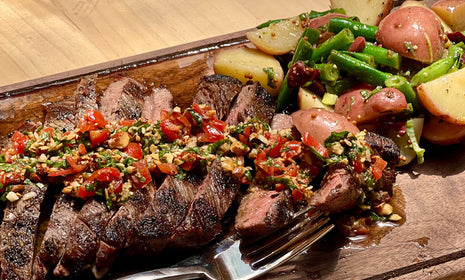
Cacio e Pepe Encrusted Flank Steak
Get the grill ready. Enjoy this flank steak recipe loaded with Bona Furtuna flavor, just in time for summer.
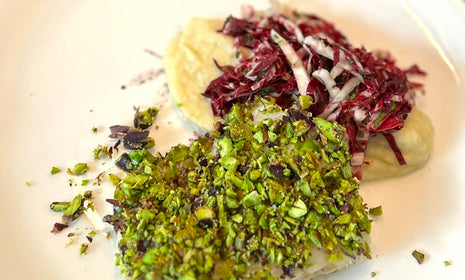
Pistachio Crusted Cod
Grown on the volcanic foothills of Mount Etna, Sicilian Bronte pistachios are coveted for their stunning appearance and superior quality. Vibrantly green, Bronte pistachios add a sweet and nutty crunch to this stunning pistachio crusted cod.
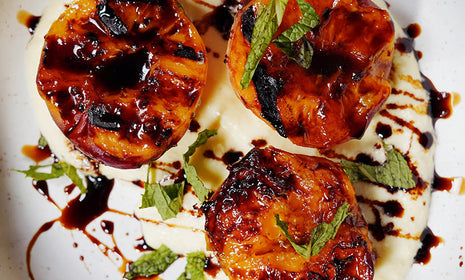
Grilled Peaches with Honey-Whipped Ricotta, Pistachios, & Aged Balsamic Vinegar
From brand partner, This Guy Cooks, this simple and mouthwatering dessert is the perfect way to wow your guests without the hassle (or clean-up) of baking. Each sweet and beautiful flavor stands out in this dish while simultaneously marrying for a creamy and light dessert.

Be the first to comment