
We understand there is a lot of terminology on olive oil packaging and messaging that get thrown around. Some sound similar, some need more context; leaving consumers wondering what it really means and does it matter? We’re here to break it down for you so you can make the best purchase for your palate.
In this article you’ll learn a few key terms referencing where olives are grown, how those olives compose your oil, and how your olive oil is processed.
SINGLE ORIGIN vs SINGLE ESTATE: UNDERSTANDING WHERE YOUR OLIVES ARE GROWN
Single origin (or single source) can reference any one origin whether that is a country or a region, it’s from one single area. When you see single origin listed on your bottle of olive oil, this typically refers to a country such as Italy, Greece, or Spain. It’s a simple geographical indicator of where your olives were harvested. However, a single country spans many terrains and vast landscapes. Many producers include more details beyond the broad term of single origin often choosing to share areas within a country of where the olives were grown.
When you see the label single estate it takes it a step further. It technically is a single origin, but the name narrows in on that location indicating it is from one estate or olive grove. You’ll want to make sure the label includes the location and estate name, otherwise it lacks the transparency behind the term.
Our single estate olive oils are harvested and processed at La Furtuna Estate in Corleone, Sicily.
Watercolor map of La Furtuna Estate in Corleone, Sicily

SINGLE VARIETY vs BLEND: UNDERSTANDING THE COMPOSITION OF YOUR OLIVE OIL
You may find terminology listing single variety or even labels listing mono-varietal. This means one type of olive was used to press and extract the oil. Is it better? Not necessarily. It means more care was taken to separate the olives during harvest, and producers wanted to highlight a specific olive variety whether for its unique flavor profile or that it thrives in the terrain of the land it's produced within. Taste it for yourself, and trust your palate.
Our Biancolilla Centinara olive oil is a single variety, named after the olive it’s extracted from. This olive oil holds a special place for us which is part of the reason we kept it separate, the other is that it has an herbal flavor that complements many dishes and wanted to showcase this best seller.
MORE ABOUT BIANCOLILLA CENTINARA
While the Biancolillia olive variety is common throughout Sicily, two trees aged over 1,500 years with distinct and unique characteristics were recently discovered in the wild. It was given the name Biancolilla Centinara, meaning ‘ancient white lilac,’ and was nurtured from the threat of extinction at La Furtuna Estate where over 5,000 trees now thrive. This olive oil represents our dedication to preserving heirloom varieties within Italy.
Biancolilla Centinara olives at La Furtuna Estate in Corleone, Sicily

When you see the label blend this simply means it is a blend of two or more olive varieties. However, this can mean a blend of olives from different countries and regions or a blend of olives grown on the same estate. You may wonder, why blend in the first place? Producers blend olive varieties to deliver flavor profiles you may not have otherwise tasted if it was kept separated or left as a single variety olive oil. The sum is greater than its parts.
**An olive oil blend is not to be confused with blended oils, which is a blend of different cooking oils such as vegetable, olive, canola, and so on. For the purpose of this article, we’re only referencing 100% pure extra virgin olive oil.
Take our Forte Blend as a great example. It’s a blend of olive varieties, all grown at La Furtuna Estate or in other words it’s a single estate olive oil blend. It gives you the details to understand what’s in the bottle and where it came from so you can decide if you want to know more. If so, keep reading.
All of our olive oils list the majority of olive varieties composing the oil. Forte is a blend of organic, native Sicilian olives including Cerasuola, Moresca, Nocellara del Belice, and Tonda Iblea and other heirloom varieties. The Cerasuola variety is a small olive but unmistakably robust, giving our Forte Blend its distinctively powerful flavor. Had this been a single variety, it may have been too pungent for most palates and so it was blended with other varieties grown at La Furtuna estate to soften and round out the flavor profile. Our olive oil tasters and sommeliers are trained on sensory analysis to cultivate and deliver these unique flavor profiles for us to ultimately share with you.
Cerasuola olives at La Furtuna Estate in Corleone, Sicily

Our Everyday EVOO is also a blend, however it is a single origin olive oil blend. That origin is not just the country of Italy, but located close to La Furtuna Estate in central-western Sicily near the Sicani mountain range. These are just some of the details to look for beyond general terms and labels if you want to know specifics of where your olive oil comes from. This olive oil is produced from 30-35 small-scale organic farms, who bring their harvests together to create this blend. Having this as part of our offerings not only gives another flavor profile to choose from but represents our mission as a company. We're proud to work together with like-minded producers, promoting sustainable farming and preserving heritage food from Italy.
COLD PRESSED VS COLD EXTRACTED: UNDERSTANDING HOW YOUR OLIVE OIL IS PROCESSED
As part of the standards in labeling olive oil products, all extra virgin olive oil must be made without heat staying under 27°C (80.6°F). In other words, all extra virgin olive oil undergoes a “cold” process to separate the oil from the fruit. Once the olives are crushed and kneaded, there are two main mechanical methods for the next phase. You may have come across terms of cold-pressed and cold-extracted, both of which separate the oil from the olive pomace.
Cold-pressed is a more traditional method to separate the oil using pressure from a hydraulic press to squeeze out the liquid. Cold-extraction uses modern technology with a centrifuge to separate the oil from the paste and water without exposure to oxygen. The latter is more efficient, and better at preventing oxidation that can result in flavor defects and inconsistencies. All extra virgin olive oils at Bona Furtuna are cold-extracted to deliver a clean, consistent taste.
Bona Furtuna Founder, Steve Luczo, with our state-of-the-art cold-extraction technology

These terms give an indication of where your olives come from, what composes each bottle of oil, and how it is processed. We encourage you to read your labels and descriptions. Now that you know some of the terms on olive oil packaging, the fun part comes next. Which olive oil should you choose? Whether your decision is based on location transparency, flavor profile, or your final dish, at Bona Furtuna, we include tasting descriptions, olive varieties, and food pairings to help guide your decision.
Related Posts
Our Olives
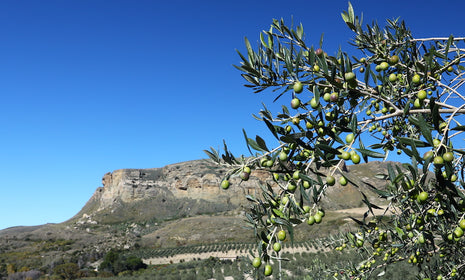
With over 12,000 olive trees of 9 different varieties growing in the foothills of Monte Barrau, it is the combination of the best Sicilian olives, our farm's biodiversity, and our closed-loop production system that produces our award-winning, world-class extra virgin olive oil.
How To Taste Olive Oil Like A Pro
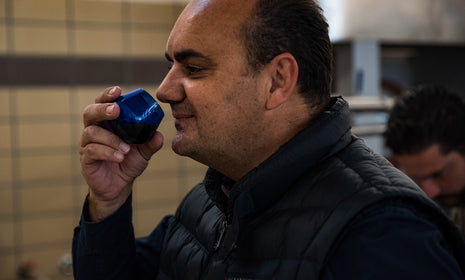
Just like wine, tasting high quality olive oil like Bona Furtuna's oils should have a range of aromas and flavor profiles to discover.
How to Use, Store and Buy the Best Olive Oil
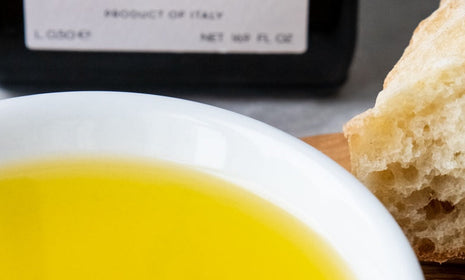
Choosing (and using) an olive oil can be unnecessarily overwhelming. It shouldn't be. Here's some easy tips on how to use premium olive oil and why a single-source EVOO like Bona Furtuna is the best choice to enhance your meals with flavor.

Be the first to comment